
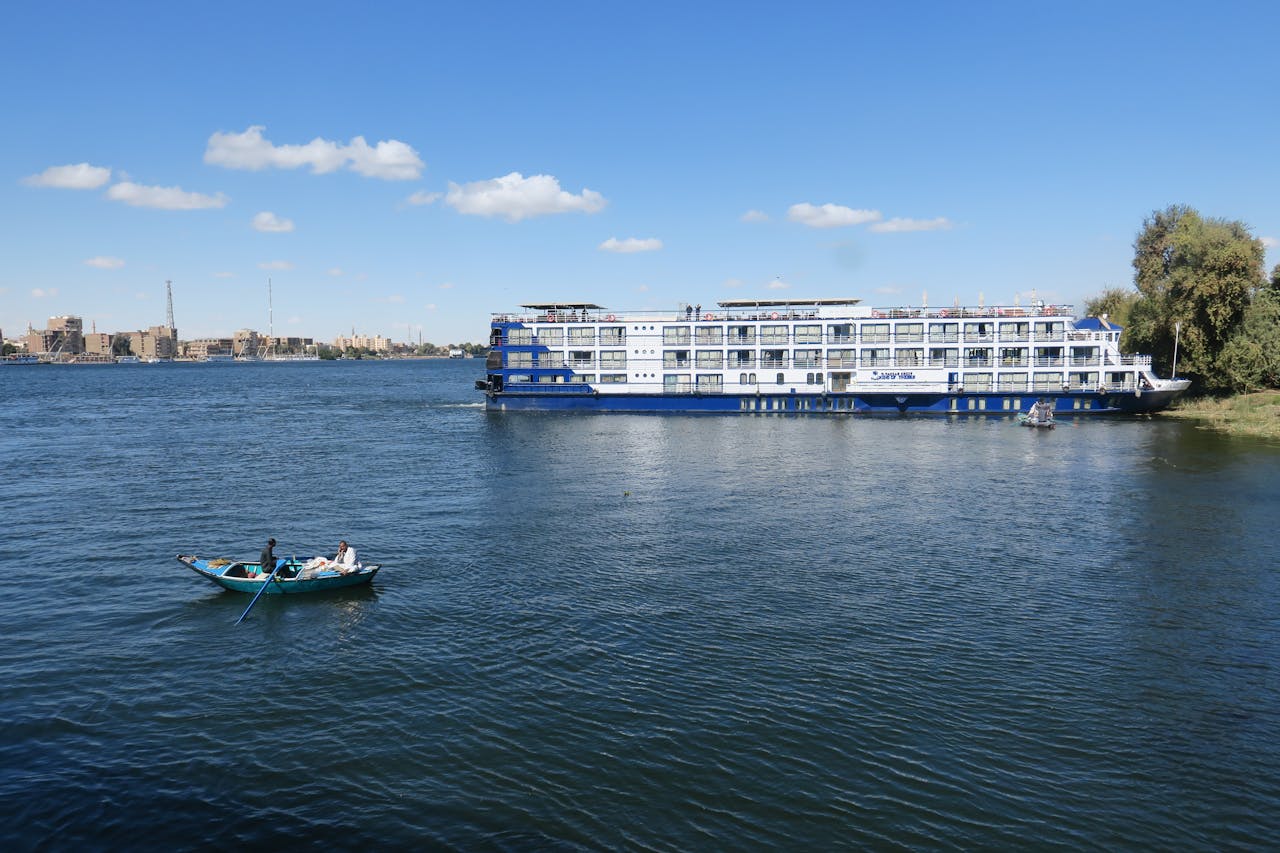
Planning a trip to Egypt often involves deciding how best to view the ancient monuments that line the country’s most famous waterway. A river Nile cruise provides a practical and highly efficient way to see these historical sites. Rather than arranging multiple road transfers or internal flights between individual temples, you can travel directly along the same route used by the pharaohs. This guide explains what a standard itinerary involves, what daily life on the boat looks like, and how to select the right vessel for your holiday.
A Journey Through Time and Culture
The Nile served as the primary highway for ancient Egyptian civilisation. Because the desert landscape made overland travel difficult, the most significant cities, temples, and necropolises were constructed directly alongside the riverbanks. Travelling by water gives you the exact perspective the original builders intended. You approach grand structures like the Temple of Edfu from the water, seeing the massive pylons gradually rise above the surrounding agricultural fields.
Modern road travel in Egypt can be dusty and occasionally disjointed. A river Nile cruise removes those logistical barriers. Your transport doubles as your hotel, moving you steadily from one historical site to the next while you sleep or relax. This method of travel allows you to focus entirely on the cultural education provided by your Egyptologist guide, rather than worrying about the practicalities of getting from point A to point B.
Unforgettable Sights and Experiences
Most itineraries travel between Luxor and Aswan, covering a distance that contains a high concentration of ancient monuments. In Luxor, you will visit the sprawling Karnak Temple complex, a vast open-air museum of pillars and obelisks. Across the river on the West Bank, you will walk through the Valley of the Kings, where intricate tombs were cut directly into the limestone cliffs to hide royal mummies from grave robbers.
Further south, the boat stops at Kom Ombo, a symmetrical temple dedicated to two different gods: the crocodile god Sobek and the falcon god Haroeris. The contrast between the arid desert sands, the lush green ribbon of farmland along the banks, and the blue water creates a striking visual backdrop for these daily excursions. In Aswan, the landscape changes to granite boulders and sandy islands, providing a scenic setting for the Philae Temple, which was painstakingly relocated to save it from floodwaters.
Life Onboard a Nile Cruise
Daily routines on a cruise follow a predictable and comfortable rhythm. Excursions usually take place early in the morning or late in the afternoon to avoid the intense midday heat. After a morning exploring a temple, you return to the boat for lunch as the vessel sets sail for the next destination. Afternoon hours are generally spent on the shaded top deck, watching the riverbanks drift past. You will see local farmers working their fields, children waving from the shore, and traditional felucca sailboats gliding by.
The ships themselves function like floating hotels. Standard amenities include a dining room serving a mixture of international and Egyptian cuisine, a lounge area for evening entertainment, and a plunge pool on the sun deck. Rooms are compact but feature large windows, allowing you to watch the scenery from your bed. The atmosphere is generally relaxed, with an emphasis on comfortable sightseeing rather than formal cruising.
Choosing Your Ideal Cruise
Selecting the right boat depends entirely on your travel preferences and budget. Large cruise ships carry upwards of a hundred passengers and offer extensive facilities, including gyms, massage rooms, and expansive buffets. These vessels run on strict schedules, making them a reliable choice for travellers with limited time. They usually cover the Luxor to Aswan route in three, four, or seven nights.
If you prefer a quieter environment, consider booking a dahabiya. These traditional, two-masted sailing boats carry a fraction of the passengers and rely on wind power rather than large engines. Because they are smaller, they can dock at less-visited islands and temples that the large cruisers cannot access. While a dahabiya takes longer to cover the same distance, it provides a much calmer and more intimate travel experience.
Prepare for Your Egyptian Adventure
A river Nile cruise remains one of the most effective ways to understand the scale and grandeur of ancient Egypt. By combining your accommodation, transport, and guided tours into a single package, you eliminate the stress of independent travel in a busy country. Review the different boat options available, consider how many days you wish to spend on the water, and choose an itinerary that fits your schedule. Taking the time to research your vessel will help create a smooth and educational holiday.